
Types of Influencers by Size, Niche, Format and Role
The types of influencers are usually sorted four ways: by audience size (nano to mega), by niche (beauty, gaming, finance and more), by content format (video, live, written, audio) and by role in a deal (ambassador, affiliate, UGC creator, KOL). Size tiers get quoted most, but they are an industry convention, not an official standard.
Use this page as the map. To build a programme around the types you pick, see our influencer marketing strategy guide.
Table of Contents
- What are the influencer tiers by follower count?
- Where do platforms draw follower lines?
- What are the types of influencers by niche?
- What are the types of influencers by content format?
- What roles can influencers play in a brand deal?
- Which type of influencer is best for your brand?
- Types of influencers FAQ
What are the influencer tiers by follower count?
Size lists, whether they name three types of influencers or six, split creators by follower count, and the cut-offs depend on who publishes them. The Interactive Advertising Bureau’s Creator Economy Ecosystem map (February 2025) uses six tiers: Checked against IAB: Creator Economy Ecosystem Mindmap (February 2025)Industry convention
| Tier | Followers (IAB, February 2025) |
|---|---|
| Nano | 1k–10k |
| Micro | 10k–50k |
| Mid | 50k–500k |
| Macro | 500k–1M |
| Mega | 1M+ |
| Celebrity | 5M+ |
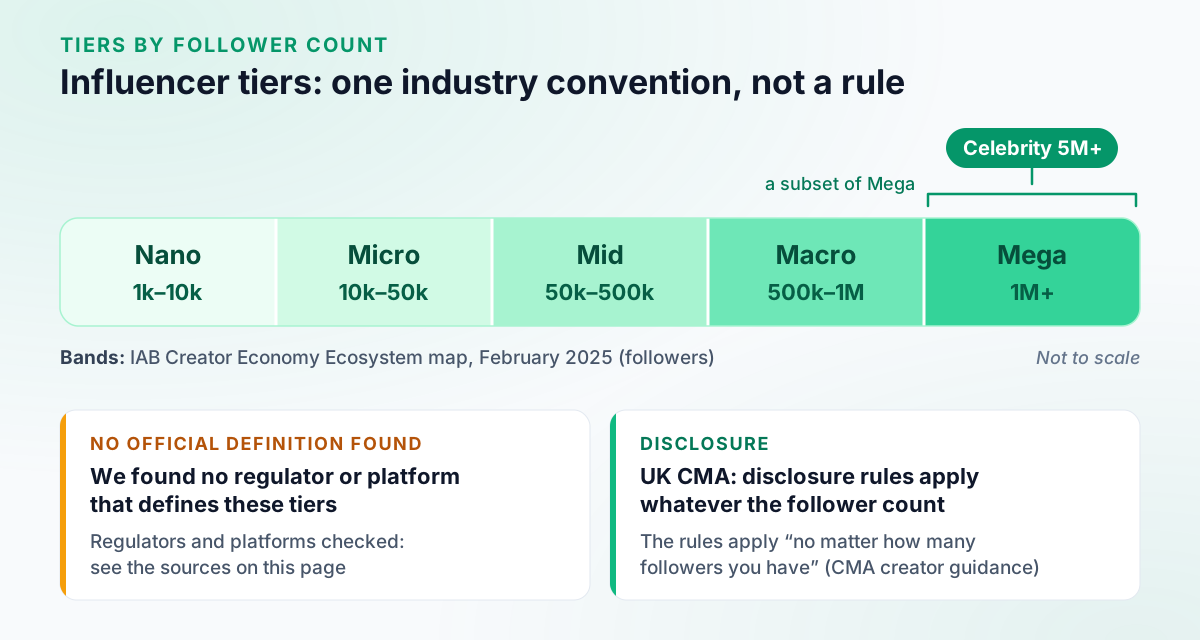
Other publishers draw the lines elsewhere, so check whose bands a report uses before comparing numbers. The FTC, the UK’s ASA and CMA, Canada’s Competition Bureau and Ad Standards, Meta and TikTok don’t define tiers in the guidance behind this page, Checked against CMA (GOV.UK): Social media endorsements: guidance for content creatorsNot verified and the CMA expects paid content to be labelled as an ad no matter how many followers the creator has. Checked against CMA (GOV.UK): Social media endorsements: guidance for content creators The two smallest tiers have their own guides: nano influencers and micro influencers.
Where do platforms draw follower lines?
Platforms don’t define tiers, but their creator programmes set follower minimums, and most sit at 1,000 or 10,000, the IAB’s nano and micro floors. The minimums as the platforms state them, before age, region and account rules:
- 500: Instagram Gifts on reels, Checked against Instagram Help Center: About Instagram Gifts on reels and YouTube’s expanded Partner Program in listed countries, as 500 subscribers plus upload and watch-time or Shorts-view conditions. Checked against YouTube Help: Overview of the expanded YouTube Partner Program
- 1,000: going LIVE on TikTok (the number may vary by region), Checked against TikTok Help Center: About TikTok LIVE Instagram’s creator marketplace, Checked against Instagram Help Center: Eligibility requirements for creators on Meta Creator Marketplace TikTok One projects, Checked against TikTok Creator Academy: How to set up TikTok One so brands want to work with you (last updated Aug 18, 2026) applying as a US TikTok Shop affiliate creator, Checked against TikTok Shop Seller University (US): Creator Eligibility Policy where accounts under 5,000 followers start in a pilot with posting limits, Checked against TikTok Shop Seller University (US): Creator Eligibility Policy and YouTube ad revenue, as 1,000 subscribers plus watch hours or Shorts views. Checked against YouTube Help: YouTube Partner Program overview & eligibility
- 10,000: Instagram Subscriptions, Checked against Instagram Help Center: Eligibility requirements for Instagram Subscriptions and TikTok’s Creator Rewards Program, which also needs 100,000 video views in the last 30 days. Checked against TikTok Help Center: Creator Rewards Program
The full TikTok rules are in TikTok monetization requirements.
What are the types of influencers by niche?
A niche is the subject an influencer is known for, and it usually decides fit faster than follower count does. Common niches include beauty and skincare, fashion, fitness, food and drink, travel, parenting, gaming, tech, personal finance and B2B. A small audience that cares about your category often does more for a brand than a large one that doesn’t.
Some niches come with platform rules. TikTok bans branded content for weight-loss products and most healthcare and medicine, and allows alcohol, financial services, medicines and vitamin supplements only by invitation from a brand TikTok has approved. Checked against TikTok: Branded Content Policy (effective 31 August 2026) Meta restricts branded content for alcohol, financial products, cosmetic procedures and weight loss, which means limits on who can see it, such as by age or location. Checked against Instagram Help Center: Branded Content Policies
What are the types of influencers by content format?
Format is how an influencer publishes, and it shapes what a sponsorship looks like and where the disclosure goes.
- Short-form video creators make vertical clips for TikTok, Reels and Shorts.
- Long-form video creators make reviews, tutorials and deep dives, with sponsor segments inside longer videos.
- Live streamers demo and sell in real time.
- Photo and carousel creators post to Instagram and Pinterest feeds.
- Writers and podcasters include bloggers, newsletter writers, LinkedIn and X posters, and hosts who read ads on air.
- Virtual influencers are computer-generated characters run by a person or a company.
FTC staff’s Disclosures 101 guide (2019, before the 2023 revision of the FTC’s Endorsement Guides) says a disclosure belongs in the video itself, not only the description, and should be repeated during live streams. Checked against FTC: Disclosures 101 for Social Media Influencers
Disclosure rules reach virtual influencers too. The FTC’s revised Endorsement Guides define an endorser as a party that “could be or appear to be an individual, group, or institution”, wording the FTC said covers virtual influencers. Checked against eCFR: 16 CFR 255.0 Purpose and definitions Canada’s Ad Standards says AI-generated influencers should disclose that they are virtual, for example with #VirtualInfluencer, Checked against Ad Standards: Influencer Marketing Disclosure Guidelines (Update: Fall 2025), p. 23 and TikTok requires a label on AI-generated content that contains realistic images, audio and video. Checked against TikTok Help Center: AI-generated content
What roles can influencers play in a brand deal?
The role is the commercial relationship, and one creator can hold several at once.
- Brand ambassador: a longer-term partner who represents a brand across many posts. TikTok’s Branded Content Policy counts brand-ambassador relationships as branded content, Checked against TikTok: Branded Content Policy (published 4 August 2026, effective 31 August 2026) and the FTC’s 2019 guide lists a stand-alone “ambassador” among terms to avoid as a disclosure. Checked against FTC: Disclosures 101 for Social Media Influencers
- Affiliate: earns a commission on sales through a tracked link or code. Instagram says posts with third-party affiliate links need its paid partnership label, Checked against Instagram Help Center: What is considered branded content and FTC staff say the words “affiliate link” alone aren’t an adequate disclosure. Checked against FTC: FTC's Endorsement Guides: What People Are Asking
- Gifted creator: receives free products, sometimes with no obligation to post. Under the FTC’s guides, free products are a material connection to disclose whether or not a post was required. Checked against eCFR: 16 CFR § 255.5(a) Disclosure of material connections
- UGC creator: paid to make customer-style content that the brand posts on its own accounts, so the footage matters more than the following. See what a UGC creator does.
- KOL (key opinion leader): trusted for expertise in a field, such as medicine or finance. See what a KOL is.
Which type of influencer is best for your brand?
The one whose audience matches your buyers and whose role matches your goal. Larger tiers suit awareness, a KOL suits a claim that needs expertise, UGC creators suit content for your own channels and ads, and affiliates suit paying on results. Judge fit first and size second. Whichever you choose, the campaign also runs on your own accounts:
Plan your brand’s posts in Outfeed AI
Types of influencers FAQ
What are the 4 types of influencers?
The four usually meant are size tiers: nano, micro, macro and mega. They are an industry convention with no official standard, and cut-offs vary by publisher. The IAB’s February 2025 map, for example, uses Nano (1k to 10k followers), Micro (10k to 50k), Mid (50k to 500k), Macro (500k to 1M) and Mega (1M+), with Celebrity at 5M+.
What is the difference between micro and macro influencers?
Audience size. In the IAB’s February 2025 bands, a micro influencer has 10k to 50k followers and a macro influencer 500k to 1M, with a mid tier in between. The bands are an industry convention, not a rule, so check which definition a report or agency is using.
What are virtual influencers?
Computer-generated or AI-made characters that post like influencers and are run by a person or a company. In the US, the FTC’s Endorsement Guides define an endorser as a party that could be or appear to be an individual, group or institution, wording the FTC said covers virtual influencers. Canada’s Ad Standards says an AI-generated influencer must still disclose a material connection.
Which type of influencer is best for my brand?
The one whose audience matches your buyers and whose role fits your goal: larger tiers for awareness, a KOL when a claim needs expertise, UGC creators for content you will post yourself, and affiliates when you want to pay on sales. Judge niche fit first and follower count second.
How many influencers are there?
We found no official, dated count. Influencer tiers have no official definition and the follower line for calling someone an influencer varies by publisher, so any total depends on who is counting and how. Treat headline figures as estimates and check who produced them.