
What Is Doxxing? Meaning and How to Protect Yourself
What Is Doxxing? The Meaning in One Paragraph
Doxxing is publishing someone’s private information online without their consent, or exposing who is behind an anonymous account, often to punish, humiliate or harass them. Merriam-Webster defines dox as “to publicly identify or publish private information about (someone) especially as a form of punishment or revenge.” Checked against Merriam-Webster Dictionary: dox Cambridge Dictionary’s definition specifies the internet and “without their permission,” Checked against Cambridge Dictionary: doxing and Dictionary.com’s covers revealing “the identity of (an online poster).” Checked against Dictionary.com: dox Other terms you’ll meet online, such as what it means to stan someone, are in our social media glossary.
Doxing or Doxxing? Spelling and Where the Word Came From
Dictionaries accept both spellings. Merriam-Webster lists dox or doxx (doxed or doxxed, doxing or doxxing), and Cambridge lists doxing, also doxxing. Checked against Merriam-Webster Dictionary: dox
Merriam-Webster calls dox a respelling of docs, the plural of doc (short for document), based on the earlier phrases “dropping docs” and “doc-dropping” for the same act. Checked against Merriam-Webster Dictionary: dox The dates disagree: Merriam-Webster gives a first known use of 2009, Checked against Merriam-Webster Dictionary: dox while Dictionary.com says it was first recorded in 2000–05. Checked against Dictionary.com: dox
What Counts as Doxxing?
Doxxing covers posting details that let strangers identify, locate or contact someone, without that person’s permission. The US Department of Homeland Security describes doxing as gathering a person’s personally identifiable information and releasing it publicly for malicious purposes, such as public humiliation, stalking, identity theft or targeting for harassment. Checked against US Department of Homeland Security, Office of Partnership and Engagement: Resources for Individuals on the Threat of Doxing (January 16, 2024)
X’s private information policy spells out the categories: home address or location, identity documents, non-public phone numbers and email addresses, financial account details, private health information and the identity of an anonymous user.
Checked against X Help Center: X's private information policy and doxxing.Archived copy, 21 September 2026 View the archived copy.
How to Protect Yourself From Doxxing
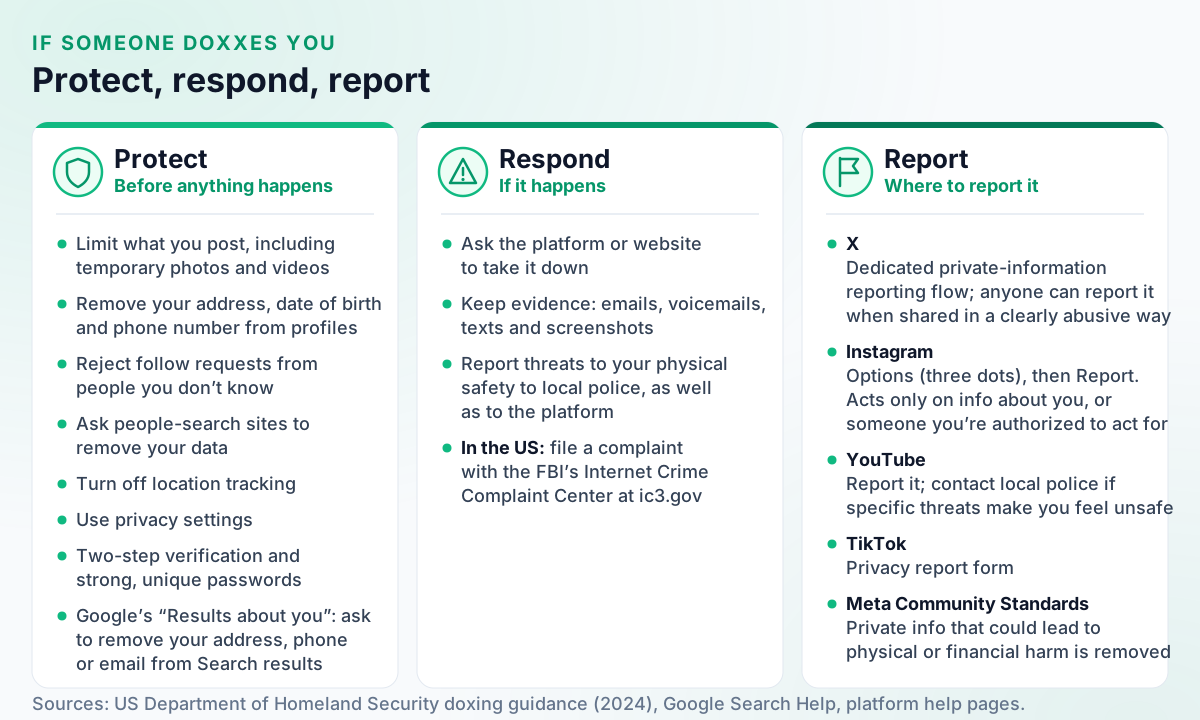
Post less about where you live and how to reach you, take those details off your profiles, and lock your accounts down. The US Department of Homeland Security’s checklist:
Checked against US Department of Homeland Security, Office of Partnership and Engagement: Resources for Individuals on the Threat of Doxing (January 16, 2024).
- Be careful what you post, including temporary photos and videos.
- Remove your address, date of birth and phone number from your profiles.
- Reject follower requests from strangers.
- Ask people-search and public-records websites to remove your data.
- Turn off location tracking.
- Use privacy settings; see how to hide your Facebook profile.
- Use two-step verification and complex, unique passwords.
Google’s “Results about you” tool lets you ask for results showing your home address, phone number or email address to be removed from Google Search (not from the website itself); some results may have no removal option. Checked against Google Search Help: Find and remove personal info in Google Search results
What to Do if You’ve Been Doxxed
Get it taken down, keep the evidence, and report threats to the police and the platform. The US Department of Homeland Security suggests:
Checked against US Department of Homeland Security, Office of Partnership and Engagement: Resources for Individuals on the Threat of Doxing (January 16, 2024).
- Ask for removal from the platform or website.
- Preserve evidence: emails, voicemails, texts and screenshots.
- Report threats to your physical safety to local law enforcement and the platform.
- File with IC3: in the US, complain to the FBI’s Internet Crime Complaint Center at ic3.gov.
In the UK, the Government Security Group adds: change exposed passwords, tell your bank if financial details were published, and call 999 if you feel in danger. Checked against UK Government Security Group (security.gov.uk): Doxing It adds that the threats and harassment that can follow doxing fall under Crown Prosecution Service offences such as malicious communications. Checked against UK Government Security Group (security.gov.uk): Doxing Elsewhere, contact your local police.
On Instagram, you can also block the account that posted it or restrict it instead.
How to Report Doxxing on Each Platform
Report it where it appeared; each platform below bans posting private information.
| Platform | What its rule bans | How to report it |
|---|---|---|
| X | Posting, threatening to expose or encouraging others to expose someone’s private information without permission | X’s dedicated reporting flow: open to anyone if it was shared in a clearly abusive way; otherwise from the person or their representative |
| Posting private and confidential information | Options (the three dots) on the post or profile, then Report. Instagram acts only on information about you or someone you’re authorized to act for; reports are anonymous | |
| YouTube | Doxxing, such as posting a non-public phone number, home address or email address to direct abuse at someone | Report the content; contact local law enforcement if specific threats make you feel unsafe |
| TikTok | Personal information that could lead to stalking, identity theft, fraud or other harm | TikTok’s privacy report form |
Instagram can’t remove information posted outside Instagram or Threads.
Checked against X Help Center: X's private information policy and doxxing.Archived copy, 21 September 2026 View the archived copy.
Checked against Instagram Help Center: Exposed Private Information.
Checked against Instagram Help Center: Report a post or profile on Instagram.
Checked against YouTube Help: Harassment & cyberbullying policies.
Checked against TikTok Community Guidelines: Privacy and Security (released August 25, 2026 and effective September 24, 2026).
Meta’s Community Standards remove private information that could lead to physical or financial harm, such as residential or medical details, but may allow information already public through news coverage, court filings or press releases. Checked against Meta Transparency Center: Privacy Violations (Community Standards) Reddit bans posting someone’s personal information and takes reports at reddit.com/report. Checked against Reddit Help: Is posting someone's private or personal information okay?
Keeping the People Behind a Brand Account Safe
A brand account is run by real people, and the same advice protects them. Our checklist: never post a staff member’s personal details, ask before tagging anyone, post event photos after the team has left, and if a follower is doxxed in your comments, report it rather than reply.
Frequently Asked Questions
Is it doxing or doxxing?
Both are accepted. Merriam-Webster lists dox or doxx, and Cambridge Dictionary lists doxing, also doxxing. Merriam-Webster calls dox a respelling of docs, as in documents.
Is it doxxing if the information is public?
It depends on whose rule applies. YouTube’s policy names non-public information, and Meta may allow information made public through news coverage, court filings or press releases. Merriam-Webster’s definition, though, includes publicly identifying someone.
What should I do if I’ve been doxxed?
The US Department of Homeland Security suggests asking the platform or website to take it down, keeping evidence such as screenshots, and reporting threats to local law enforcement and the platform. In the US you can also file with the FBI’s IC3 at ic3.gov; in the UK, government guidance says to call 999 if you feel in danger.
Is doxxing illegal?
This isn’t legal advice, and we can’t answer for every country. UK government guidance says the threats, cyberstalking and harassment that can follow doxing fall under offences such as malicious communications. Elsewhere, contact your local police.